Director’s Corner: John L. Marshall, MD
Posted in Announcements
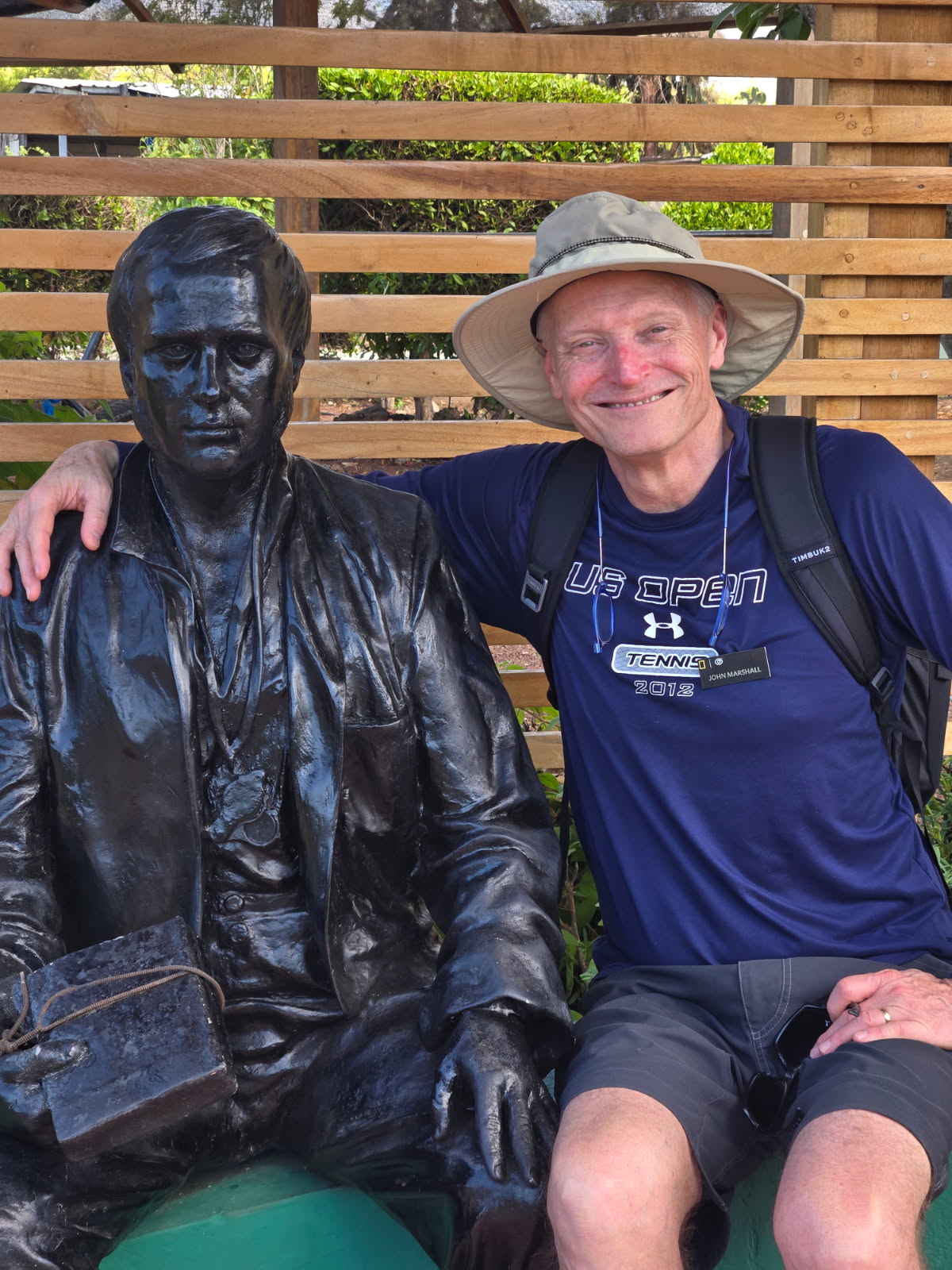
A recent visit to the Galapagos gave me time to reflect on evolution, not just in nature but also in cancer and medicine.
In oncology, we see evolution play out every day. Under the treatments we give, cancer cells face intense selective pressure. The cells that survive adapt. They become resistant. They continue to evolve.
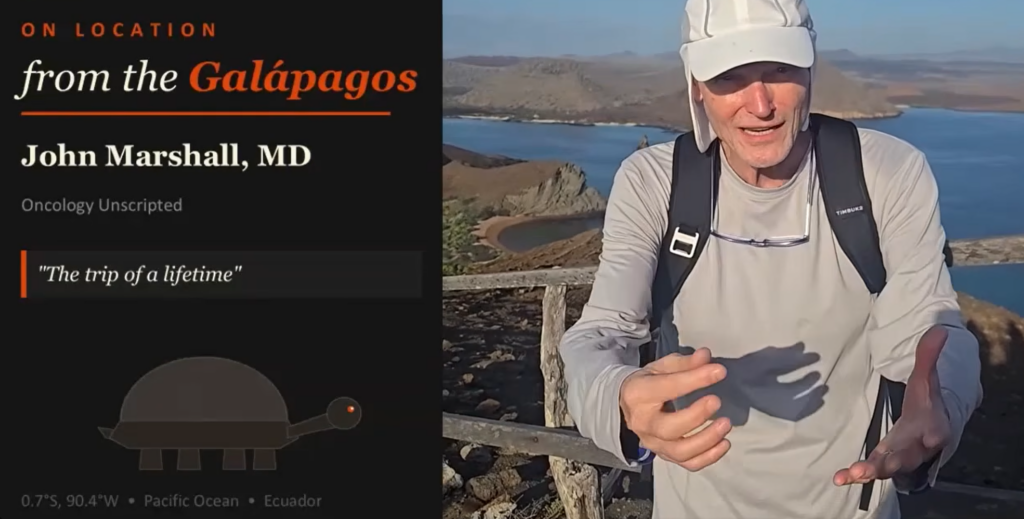
It raises important questions. Why are we seeing young patients with colon cancer today when this was rare just a few decades ago? Is this natural selection, or something shaped by our environment and the choices we make as a society?
Darwin’s observations in the Galapagos changed how we understand life on this planet. In our clinics, we are now trying to “crack” evolution in real time, using advances in precision oncology, data science, and increasingly, artificial intelligence. These tools are transforming how we diagnose and treat cancer.
But as medicine accelerates, we must also pause to reflect. Our relationship with our patients, with each other, and with the world around us still matters deeply. Technology can guide decisions, but the human touch remains central to care.
I hope these reflections encourage you to look back at what we’ve learned, and to think carefully about how we move forward. Evolution is happening all around us. The question is how we choose to participate in it.