

Courtney Kissell: March Reflections as a CRC Survivor
Posted in Announcements
There isn’t a day that goes by that I don’t reflect on my colorectal cancer journey. It has profoundly shaped who I am—how I lead, how I show up for others, and how I advocate for awareness and early detection.
In recent months, we’ve lost several well-known figures to this disease, and I recently attended the funeral of a young man who passed away at just 32 after a ten-month fight. These losses are a powerful reminder that colorectal cancer doesn’t discriminate by age—and is now the leading cause of cancer-related deaths among young adults.
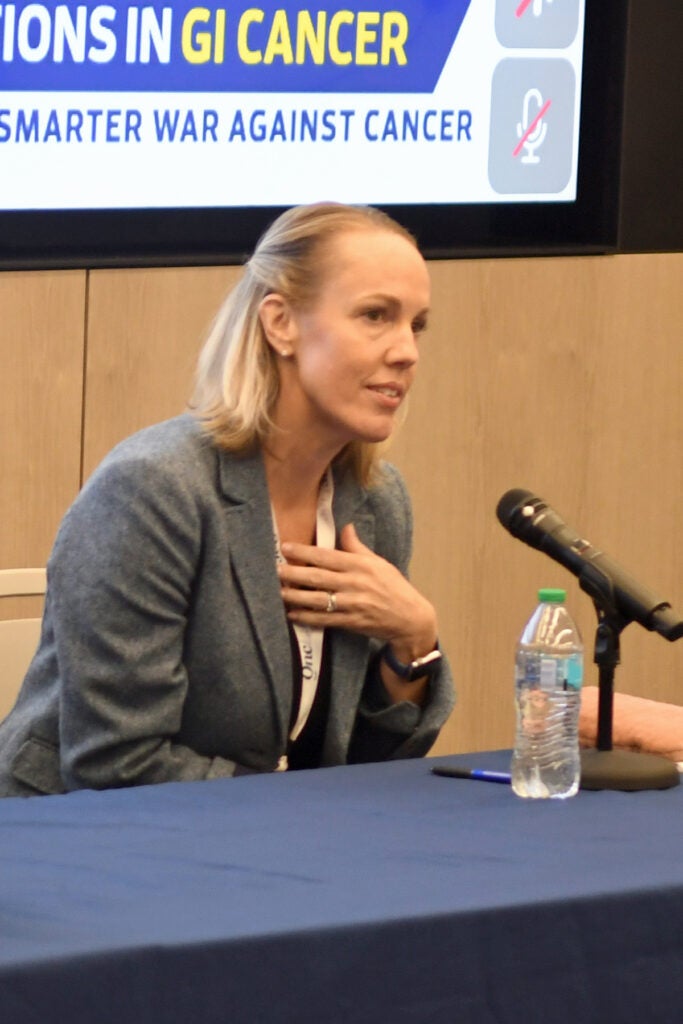
I urge everyone to be proactive about their health. If you’re 45 or older, please schedule your screening. If you’re younger and notice that something feels off, don’t ignore it—speak up, be your own advocate!
I was diagnosed in 2018, and at that time, I didn’t feel like there was a space specifically for those of us facing early-onset cancer. While I was aware of national organizations, I was really looking for something more connected to my local community. Since then, I’ve made it a priority to be that support for others who receive a diagnosis. I try to show up with presence, to listen, and to offer my story when it might be helpful. It’s my way of creating the kind of connection I was once searching for.
I first went to my doctor in September, but I didn’t receive a colonoscopy until the end of February, and by then, I was diagnosed at stage 3. That experience taught me how critical it is to advocate for yourself, because no one else will do it for you. You know your body better than anyone, and if something doesn’t feel right, it’s important to keep pushing. Doctors are human too, so don’t be afraid to be the squeaky wheel.
My experience with my medical team at Georgetown’s Lombardi Comprehensive Cancer Center was truly centered around a whole-person care model. Cancer was never the only focus—they cared for me mentally, physically, and spiritually throughout my journey. There were moments when a simple hug on a hard day made all the difference. That level of compassion made Georgetown feel like more than a care team; it felt like a group of people who genuinely loved and supported me.
Together, we can raise awareness, support one another, and work toward prevention through early detection.