

AI in Cancer Care: Promise, Pressure, and the Physician’s Role
Posted in Announcements
Dr. Marshall shares his thoughts in a recent episode of Oncology Unscripted.
Artificial Intelligence is everywhere. Everyone’s talking about it. The quality of AI has changed dramatically, even in the last year or so. Recently, we took information collected on Post‑it notes from a meeting 3 years ago—sitting in a shoebox—and uploaded it into AI. It’s now analyzing the overall themes of feedback from that busy meeting. That’s where we are with AI at this point.
Looking at AI in health care, efforts like the Cancer AI Alliance are bringing together millions of de‑identified patient data from academic centers, with the goal of predicting treatment response, identifying biomarkers, and better understanding what makes cancers tick. This raises possibilities: reducing trial‑and‑error treatment, analyzing rare cancers, and even rethinking clinical trials and placebo arms.
At the same time, AI is expanding into areas like manuscript writing, lecture creation, and data interpretation. But how do we know what’s real? As more clinicians use AI, ensuring checks and balances—and maintaining a strong knowledge base—remains critical.
AI itself highlights both its promise and risks: improving diagnostics and efficiency, while introducing concerns around privacy, bias, cost, and a potential loss of empathy. It can democratize knowledge and become increasingly interactive, but questions remain about its role in informed consent, patient counseling, and decision‑making.
Ultimately, while AI is here to stay and will continue to shape how we understand and deliver care, it also introduces real tension—between efficiency and empathy, prediction and judgment, data and experience. It may improve diagnostics, speed discovery, and even mirror aspects of communication, but it cannot fully replace the human presence at the bedside.
As I’ve said, telepresence is not the same as presence. There is an “aura” to being a physician—grounded in practical wisdom, real‑time decision‑making, and human connection—that simply cannot be generated by a machine. As AI continues to evolve, the question is not whether it replaces us, but how we ensure that this essential human role—and the trust and connection it brings—remains at the center of care.
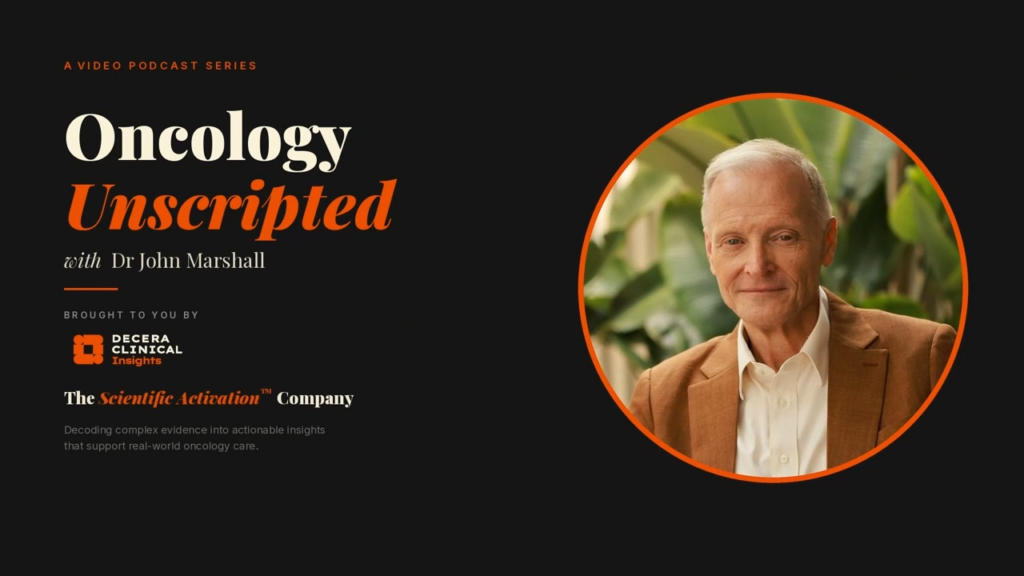
See the full episode of Oncology Unscripted to further explore this topic with Dr. Marshall and special guests.